

Pergola Orientation Guide: Sun Path and Shade
Last updated: October 25, 2026
Pergola Orientation Guide: How Sun Path Changes Shade Through the Day explains pergola orientation because the sun moves across a different part of the sky in the morning, at noon, and in the afternoon, and that changes where shade lands on a patio or yard. A pergola turned the wrong way can leave the seating area bright at 4 p.m., even if it feels fine at 9 a.m.
Pergola orientation, explained in plain terms
Pergola orientation means the compass direction your pergola faces and the way its roof members line up with the sun path. For shade, that is usually a question of east, south, west, and north more than a question of style.
A generic article often skips the part that matters most: shade is not fixed. It shifts with time of day and season. In summer, the sun rises higher and tracks longer arcs. In winter, the sun stays lower and throws longer shadows. That means the same pergola can feel generous at noon in July and thin at 3 p.m. in October.
The simplest rule is this: the side of the pergola that receives the strongest sun for the longest stretch needs the most attention. If the patio gets blasted in the afternoon, west-facing exposure matters most. If the space is used early in the day, east-facing exposure can be the bigger problem.
Orientation also affects how slats, rafters, and any canopy do their work. A pergola with open beams gives dappled shade, not full cover. Turn it 90 degrees and you change which hours get filtered light and which hours get direct rays. That is why pergola orientation belongs in the planning stage, not after the posts are set in concrete.
If this project sits inside a larger plan, the hub on pergola design and planning is the right place to branch out after this page.
How sun path changes shade through the day
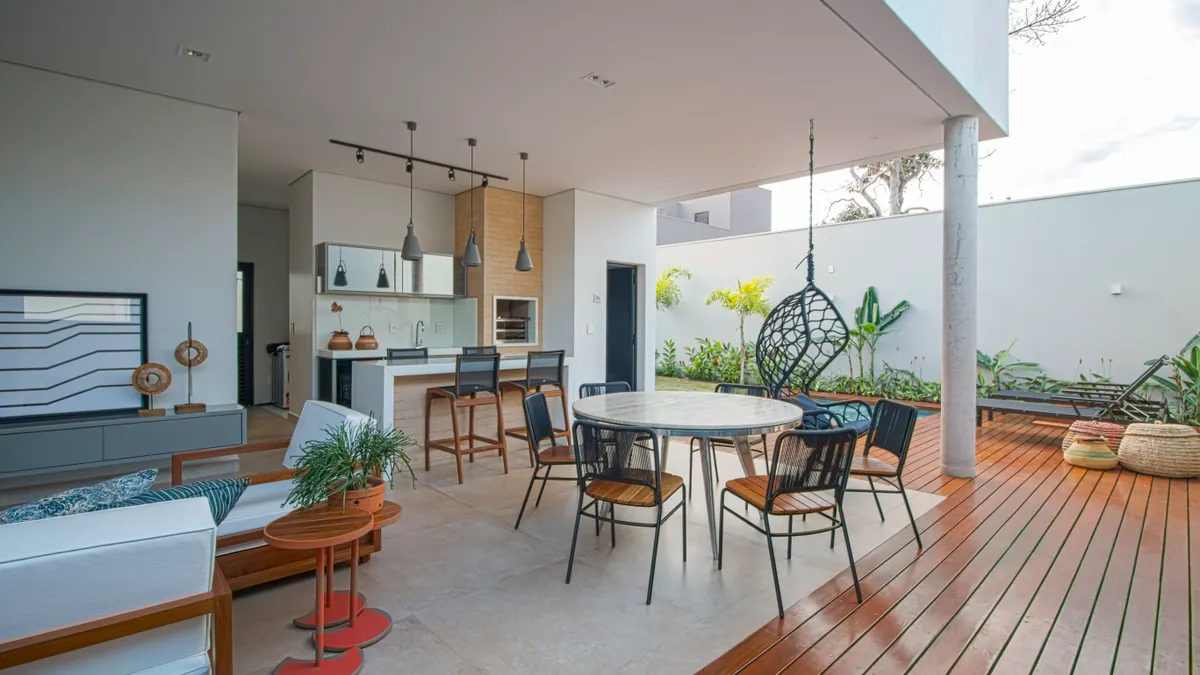
The sun path changes shade because the sun’s angle shifts from low in the east in the morning to high overhead near midday to low in the west late in the day. That movement changes both the length and direction of the shadow a pergola throws.
A low sun angle makes long shadows. That is why morning and late-afternoon shade behave differently from midday shade. At a low angle, a pergola can throw a longer shadow across a patio edge, a dining zone, or even a nearby wall. At a high angle, the same structure may only shade the area directly beneath it.
For a reader trying to decide orientation, the useful habit is to picture the sun in three slices of the day:
- Morning: east side exposure matters most.
- Midday: overhead sun reduces side-cast shadow, so roof pattern matters more than facing direction.
- Afternoon: west side exposure becomes the pressure point.
This is where many people make the wrong choice. They orient a pergola for the view or the house façade, then discover the sitting area is unusable at the exact hour they wanted it most. If the yard is used for breakfast, east light may be welcome. If it is used for dinners, west sun can be punishing.
Seasonal sun angle matters too. In summer, the higher sun angle can make a pergola seem more effective, because the shadow falls more directly under the structure. In winter, the lower sun angle lengthens shadows and can send filtered light farther across the patio. That can be a benefit if the goal is more winter brightness, but it is a drawback if the goal is maximum warmth-free shade.
A good orientation answer is not “more north” or “more south” by default. It is “which hours of sun do I need to block on this patio, in this yard, at this latitude, in this season?”
Which compass direction usually gives the best shade?
The best compass direction for shade is the one that blocks the sun at the time the patio is actually used, not the direction that sounds best in a vacuum. That said, west exposure is often the hardest to manage because late-day sun is low, hot, and stubborn.
Here is the practical way to think about cardinal directions:
- East-facing pergola orientation helps reduce morning glare and early heat. It is useful for breakfast patios and morning coffee spots.
- West-facing orientation is the most demanding if the space is used after work or for dinner. The late sun comes in low and can slip under shallow roof lines.
- South-facing orientation often gets the most sun over the course of the day in the Northern Hemisphere, so it usually needs the most shading strategy.
- North-facing orientation tends to be the easiest for softer, more even light, but that does not mean it is automatically shaded enough.
That last point is where generic advice fails. A north-facing pergola is not a magic answer. If the yard is open, the sun can still reach it from the side, especially in summer when the sun path is higher. Nearby fences, trees, second-story windows, and the house itself also change the result.
If the site has strong west exposure, the pergola should usually be planned to intercept that low-angle afternoon light. That can mean aligning the roof members so the structure casts deeper bands of shade where people sit. If the site is mostly east exposure, the priority is often softer morning shade and glare reduction rather than full darkness.
For example, one useful test is to stand on the patio at the exact hour you most want shade. If the sun is in your eyes for 20 minutes straight, that hour deserves priority over the rest of the day. A pergola that solves the wrong hour is a pretty object and a poor shelter.
How do I orient a pergola for my patio?
I orient a pergola for the patio by tracing the sun path on that specific site, then turning the structure so the worst exposure is blocked during the hours of use. The result should be better shade at the time you actually sit outside, not just a nicer floor plan.
Use this 5-step process:
- Mark the hours you care about. Pick 2 or 3 times, such as 8 a.m., noon, and 5 p.m., because shade needs change across those windows. The goal is to solve real use times, not the whole day.
- Face yourself toward the patio from the house. Note where east, south, west, and north fall relative to that view. A compass app on a phone is enough for a rough read, and it will show whether the patio is getting morning or afternoon exposure.
- Watch the shadow line for one full day. Check the patio every hour or two, or at least in morning and late afternoon, so you can see where sun enters from the side. The result should reveal whether the sun path is mainly overhead or lateral.
- Rotate the pergola plan to block the strongest exposure first. If late sun is the problem, favor a layout that takes aim at west exposure. If breakfast shade matters more, turn the layout to soften east light. This step matters more than matching the pergola to the house wall.
- Confirm the direction with the roof rhythm. The slat direction and beam spacing should support the chosen orientation, because open members shade differently depending on angle. The result is a pergola that works with the sun instead of against it.
The biggest mistake here is choosing orientation from a site plan alone. A drawing shows shape, not glare. If the patio is bordered by a tall fence on one side and open lawn on the other, the sun path can behave very differently from what the compass suggests.
This is also where a small amount of seasonal thinking pays off. A patio that feels fine in June may need more help in September when the lower sun starts reaching farther under the pergola. That is not a failure of the design. It is normal seasonal shift.
Seasonal sun angle: why summer and winter need different thinking
Seasonal sun angle changes how much shade a pergola can actually deliver, and that changes the best orientation for a yard exposed to different conditions in July than in January. A layout that feels ideal in midsummer can feel underpowered when the sun drops lower in the sky.
In summer, the sun is higher, so a pergola can create more direct overhead relief. The shadow is tighter and closer to the footprint of the structure. That makes summer shade easier to control with ordinary rafters and beams.
In winter, the sun sits lower, especially during the middle of the day. Longer shadows can reach past the edge of the patio, which sounds helpful until you realize that low-angle rays can also sneak under the roof line from the side. If the goal is year-round comfort, that lower sun must be part of the orientation decision.
The trade-off is simple: an orientation that favors summer shade may reduce winter brightness, while an orientation that preserves winter light may leave more summer glare. There is no single “best” compass direction for every yard.
A site with strong southern exposure in the Northern Hemisphere often gets the broadest swing between seasons. A west-facing patio may feel tolerable in January but harsh in August. An east-facing patio may be pleasant at breakfast but too bright for a second cup of coffee if the sun reflects off pale paving.
This is why the most honest advice is to choose the dominant season first. If the pergola is mainly for summer use, prioritize stronger shade against high sun and late-day heat. If the space should stay welcoming in cooler months, allow for more solar access and avoid over-orienting it into permanent dimness.
Common pergola orientation mistakes that ruin shade
The biggest pergola orientation mistakes are ignoring use time, overtrusting the compass, and assuming one side of the yard behaves like every other side. Each one costs comfort, and the fix is usually simple if it is caught early.
The most common error is aiming for visual symmetry instead of sun control. A pergola that lines up neatly with the house may look tidy, but if that alignment exposes the seating zone to 4 p.m. west sun, it is the wrong choice. The cost is a hot patio and a space that gets used less.
A second mistake is treating north, south, east, and west as identical labels. They are not. In the Northern Hemisphere, south exposure often brings the strongest all-day solar load, while west exposure is especially rough in the late afternoon. If the reader assumes every direction behaves the same, the shade plan fails on the hottest hours. When the site is complex, consult a local designer or contractor and use a sun-path chart or solar guide as a check.
A third mistake is forgetting that nearby objects shape the result. A 6-foot fence, a mature tree, or the side of the house can block or reflect sun in ways a bare site plan never shows. A pergola on paper may look perfectly oriented and still perform badly if a reflective wall bounces light into the patio.
A fourth mistake is choosing an orientation that works only for one season. If the space is used from April through October, the lower fall sun matters almost as much as the July sun. A setup that solves July and ignores September will disappoint.
What to do instead: check the site at the actual times you will use it, note where the shadows land, and choose the orientation that solves the worst exposure first. If the patio is used mostly for dinners, that usually means giving priority to west sun. If it is a morning seat, east exposure comes first.
A simple way to read your site before you build
A quick site read gives enough information to make a sound pergola orientation choice without turning the project into a survey job. Two tools are enough: a phone compass and a notepad.
Start with the patio itself. Stand in the main seating area and note which direction the open sky feels largest. That opening usually tells you where the strongest sun path will come from during part of the day. Then check the same spot at two different times, ideally one in the morning and one in late afternoon, because the difference between those readings is the difference between comfortable shade and a glare problem.
If you want a more reliable read, observe the site for 2 or 3 separate days. The shadows from the house, a fence, and nearby trees will shift enough to reveal patterns. You do not need a month of measurements to see the issue. You need one clear picture of when the sun hits the patio hardest.
For technical planning, a solar path diagram or sun chart for your location can sharpen the picture. The U.S. Department of Energy’s Energy Saver guidance on passive solar design and sun angles is a useful starting point, and the National Renewable Energy Laboratory’s solar resource tools can help with local sun-path awareness if a more detailed look is needed. See the DOE’s Energy Saver page on passive solar homes, NREL’s solar resource data tools, and the U.S. Energy Information Administration’s solar basics for background on sun angles and solar resource planning.
This step is not for someone who wants a purely decorative pergola with no shade goal. If the structure is meant to be a visual frame only, orientation matters less. If comfort is the reason for building it, orientation is the difference between a patio you use and a patio you avoid.
The verdict: choose for the worst hour, not the prettiest view
Pergola orientation should be chosen around the worst sun hour on the patio, not around the prettiest line on the lot. That usually means paying close attention to west exposure for evening use, east exposure for morning use, and seasonal sun angle if the space will be used beyond one season.
The wrong person to follow on this topic is anyone who says a pergola can be oriented the same way on every site. A narrow side yard, an open backyard, and a shaded courtyard do not behave alike. The right move is to read the sun path first, then let the compass direction serve the shade goal.
Key Takeaways
- Pergola orientation is about matching compass direction to the hours the patio is actually used.
- Morning sun, midday sun, and late-afternoon sun create different shade patterns.
- West exposure is often the hardest to manage because low evening sun is strong and persistent.
- Seasonal sun angle changes shade performance, so summer and winter should both be considered.
- A quick site read with a compass app and shadow checks is better than guessing from a plan.
Which direction should a pergola face?
The best direction depends on when the patio needs shade most. If evening use matters most, I would prioritize blocking west exposure; if breakfast shade matters most, east exposure is the better target. There is no universal compass direction that wins on every site, because the sun path changes by season and location.
How do I maximize shade from a pergola?
Maximize shade by orienting the pergola toward the strongest sun exposure, then matching the roof members to that sun path so the structure blocks the critical hours.
Drafted with AI; not yet reviewed by a person.


